If you are deciding between bus and train in Morocco, the real question is not which one is “better” in general. The better choice depends on the route, the station setup, the last mile, and whether you want the simplest travel day or just the fastest-looking ticket on paper.
The practical short answer is this: train is usually the best choice on Morocco’s strongest rail corridors, especially when your trip fits naturally into the ONCF network. Bus is usually the better choice when the destination sits outside the rail spine or when the road route takes you more directly where you actually need to go. That is why the smartest decision usually starts with the map, not with a personal preference for one mode.
The short answer
- Choose train first on the strongest ONCF corridors like Tangier, Kenitra, Rabat, and Casablanca
- Choose bus first when the route is not solved well by rail or when the final destination is outside the train network
- Choose bus for destinations that are commonly approached by coach, such as Essaouira or Merzouga
- Choose train when you want a cleaner station-to-station trip on the main north-west corridor
- Do not choose by habit alone: the last mile often matters more than the headline travel time
If you only want one practical rule, use this one: take the train when the rail network already matches your route well, and take the bus when the road route solves the trip more directly.
When train is usually the better choice
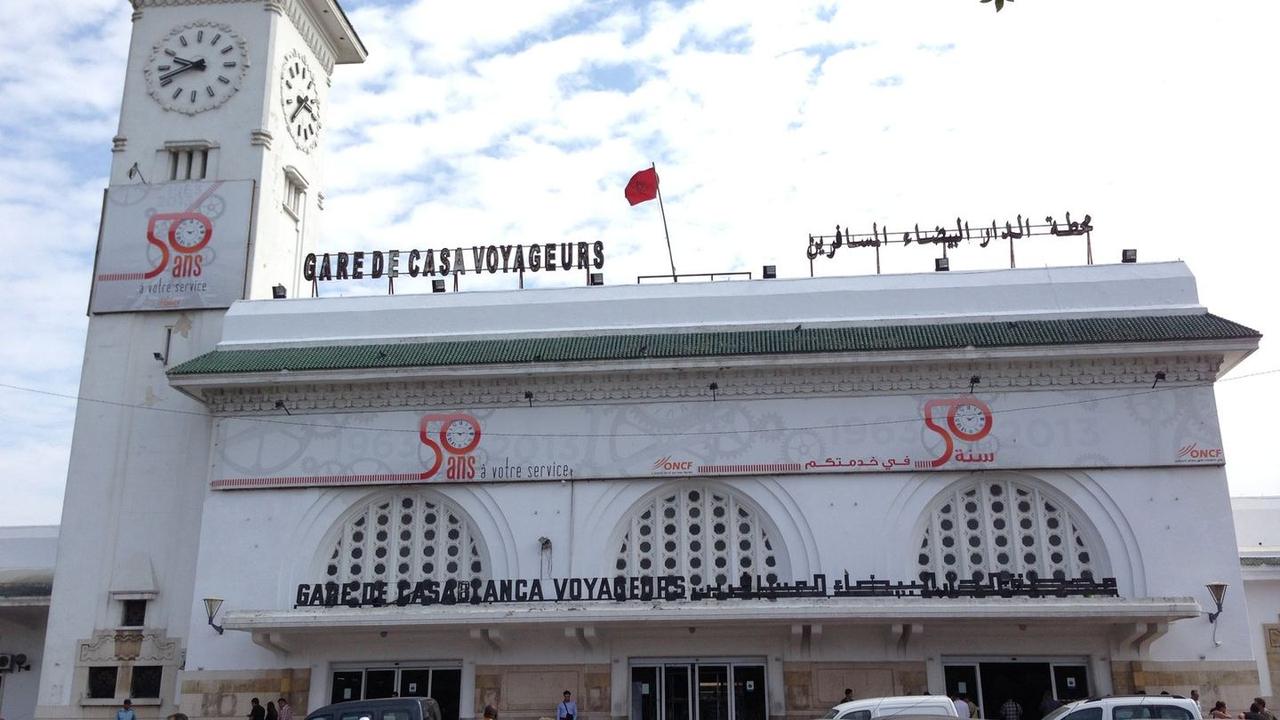
Train is strongest when you are moving along Morocco’s better-served rail spine. ONCF’s network is built around train travel like Al Boraq, Al Atlas, and TNR, and official Al Boraq schedules show frequent service linking Tangier, Kenitra, Rabat Agdal, and Casa Voyageurs. On those kinds of corridors, train usually gives the cleanest public-transport answer.
Train is often the better choice when:
- you are traveling between major rail cities such as Tangier, Rabat, and Casablanca
- you want a station-to-station trip without road traffic shaping the day
- you are continuing on a rail-based itinerary
- your hotel or next connection is already near the train station
In those cases, forcing the trip into a bus plan can make the day more complicated than it needs to be.
When bus is usually the better choice
Bus becomes stronger when the destination is not served naturally by the rail network or when the coach route gets you closer to where you actually want to end up. This is where CTM and Supratours matter most. CTM’s own route pages and homepage emphasize intercity coach corridors like Casablanca to Agadir, Casablanca to Oujda, Marrakech to Agadir, and Casablanca to Tetouan. Official Supratours timetables also show coach links from Marrakech toward places like Essaouira, Agadir, Merzouga, and Zagora.
Bus is often the better choice when:
- the destination is outside the main rail network
- you want a more direct road route
- you are heading to places where coach is the normal public-transport answer
- the bus station setup is more convenient than the train-plus-transfer alternative
This is why routes like Marrakech to Essaouira, Fes to Chefchaouen, and Marrakech to Merzouga should usually be approached as bus-first decisions, not train-first ones.
The biggest difference is not speed. It is route fit.
Many travelers compare bus and train as if one mode is globally faster, cheaper, or more comfortable. That is not the right comparison. The real difference is whether the mode fits the route well.
For example:
- Train fits naturally when the city pair already sits on the strongest ONCF corridor
- Bus fits naturally when the destination is a road-trip destination more than a rail destination
- A train that still leaves you with a long extra transfer is not always the better ticket
- A bus that arrives closer to your actual hotel can easily win even if it is slower on paper
This is why route fit matters more than abstract mode preference.
Comfort: what travelers usually get wrong
Travelers often assume train automatically wins on comfort, but that is not always the right shortcut. CTM’s official premium service page highlights a fairly strong coach product, including a dedicated boarding lounge, Wi-Fi, USB charging, leather seats, and adjustable air conditioning. That means the bus side of the comparison is not just “cheap road transport.”
The smarter comfort question is this:
- Which option gives me the calmer departure and arrival?
- Which one handles my luggage more simply?
- Which station is easier from my hotel, airport, or riad?
- Which option leaves me with the cleanest last mile?
A theoretically nicer seat is not always what makes the day easier. The easiest arrival usually matters more.
When Supratours changes the answer
Supratours is important because it often sits between the train world and the bus world. Official ONCF group and timetable materials make that logic clear: the network uses Supratours coaches to continue beyond rail-served points toward destinations the trains do not reach directly.
That means some trips are not really “train or bus” in a pure sense. They are “train first, then Supratours” or “Supratours instead of trying to force rail too far.” This matters especially if you are starting in a rail city and ending somewhere better served by coach.
If that is your kind of itinerary, read CTM vs Supratours in Morocco next.
Which routes should usually be train-first?
These are the kinds of trips where train often deserves the first comparison:
- Tangier to Rabat
- Tangier to Casablanca
- Rabat to Casablanca
- Kenitra to Tangier
On those corridors, the ONCF network is usually the cleanest public-transport starting point.
Which routes should usually be bus-first?
These are the kinds of trips where bus usually deserves the first comparison:
- Marrakech to Essaouira
- Fes to Chefchaouen
- Marrakech to Merzouga
- Marrakech to Zagora
- Casablanca to Agadir
These routes are either outside the cleanest train logic or are commonly solved more directly by coach.
The biggest mistake travelers make
The biggest mistake is choosing the mode before thinking about the whole travel day. A traveler sees “train” and assumes it must be better, or sees “bus” and assumes it must be cheaper and simpler. Both shortcuts can fail badly if the station is wrong, the last mile is awkward, or the destination is not actually rail-friendly.
The better order is:
- pick the exact route
- ask whether the rail network serves it naturally
- compare whether coach gets you closer to the real destination
- choose the mode that makes the whole day easier, not just the ticket look smarter
Final verdict
Train is usually the better choice in Morocco when your route fits the strongest ONCF corridors and your day is already rail-friendly. Bus is usually the better choice when the destination sits outside that rail spine or when coach gets you more directly where you actually want to go. The right choice is not bus versus train in theory. It is the option that gives you the cleanest real travel day on your exact route.